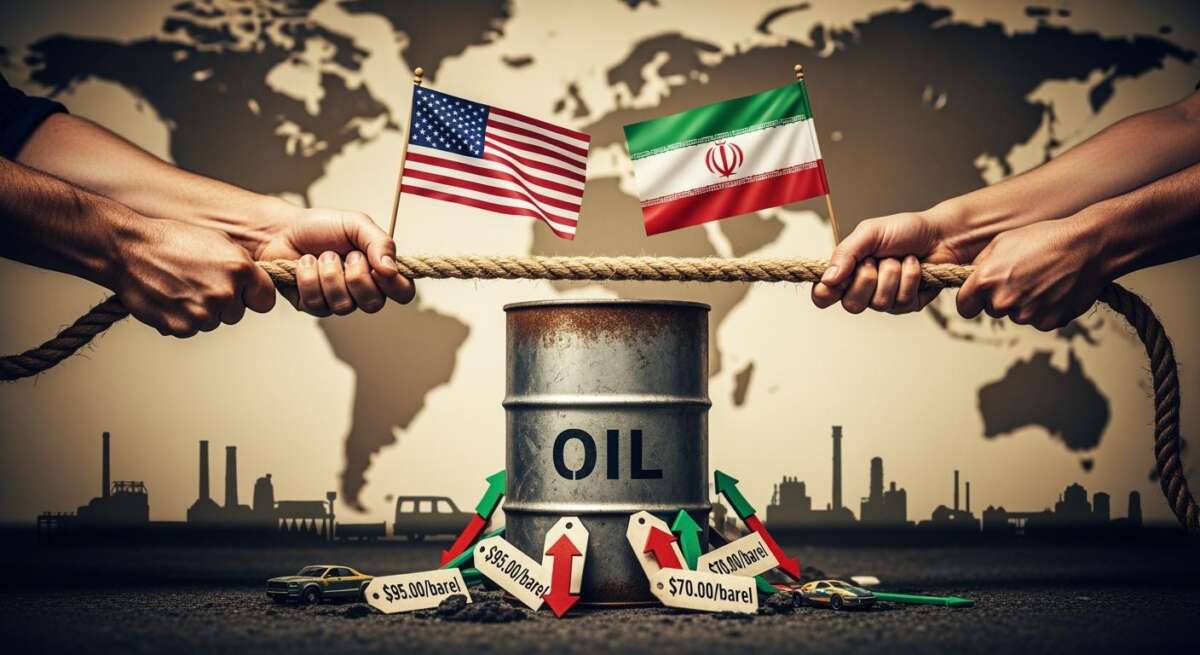
You might have seen gas prices go up fast at your gas station. The us–iran conflict made fuel prices rise around the world. Brent crude is now $78.04. West Texas Intermediate is $70.60. Experts in Canada and the UK think prices will keep going up. Cars and trucks need oil to run. If there are problems in the Strait of Hormuz, driving can cost more money. To handle higher costs, you can watch prices and plan your trips better.
Key Takeaways
Problems between countries, like the US–Iran conflict, can make oil prices go up fast. Watch the news so you know when gas prices might change.
The Strait of Hormuz is very important for oil around the world. If there are problems here, gas prices can go up a lot. This can make your daily costs higher.
When oil prices go up, gas prices also go up. If crude oil costs $10 more, you will pay about 25 cents more for each gallon of gas.
To save money on gas, try to do many errands in one trip. Keep your tires full of air. Use apps to find the lowest gas prices near you.
Pay attention to what experts say about the market and world events. Knowing these things can help you plan how much money you need for gas and trips.
US–Iran Conflict and Oil Price Volatility
Geopolitical Tensions Impact Oil Markets
You see oil prices change quickly when geopolitical tensions rise in the Middle East. The us–iran conflict has made oil prices jump. Recent military actions by the US and Israel against Iran caused sharp price increases. Brent crude futures spiked, and experts warn that ongoing conflict could push prices above $100 a barrel. Oil markets react fast to news about the iran conflict. Even the perception of risk can make oil prices go up. Iran controls the Strait of Hormuz, which is a key route for oil shipments. When tensions grow, shipping insurance costs rise and tanker traffic slows. This tightens supply and makes oil prices surge. You notice these changes at the gas station, where prices reflect global oil prices.
Iran’s control over the Strait of Hormuz influences oil price volatility.
Threats of disruption in the Strait lead to higher shipping costs and less tanker movement.
Military escalation, like strikes on Gulf production facilities, causes sharp price spikes.
Perceived risk in the Strait leads to immediate increases in crude prices, affecting gas prices in the US.
The extent of price increases depends on whether tensions turn into a supply shock.
Oil prices respond to every headline about the Middle East. You feel the impact in your daily life when gas prices rise.
Strait of Hormuz Disruptions
The Strait of Hormuz is one of the most important chokepoints for oil in the world. About 20% of global oil and liquefied natural gas moves through this narrow waterway. If there is a disruption, oil prices can reach historic levels. The us–iran conflict has already caused disruptions. The Strait was effectively closed after US-Israel missile attacks on Iran. Brent crude oil prices surged by 13%, reaching $81.57 a barrel, the highest in over a year. This disruption led to concerns about inflation and supply chain problems. When the Strait of Hormuz is blocked, oil supply drops and prices rise fast. You see higher gas prices and worry about the cost of driving.
The Strait of Hormuz handles 18–19.5 million barrels per day of crude and refined products.
This represents 25% of all seaborne oil trade.
Disruption in the Strait leads to significant increases in global oil prices.
Brent crude surged after recent attacks, showing how sensitive prices are to events in the Middle East.
The Strait of Hormuz acts as a lifeline for oil supply. Any disruption affects oil prices worldwide and makes gas more expensive for you.
Iran’s Role in Global Oil Supply
Iran plays a major role in the oil market. It is the fifth largest crude oil producer in OPEC+. Iran produces about 3.3 million barrels of oil each day. Exports range from 1.5 to 2 million barrels per day. Iran’s influence over the Strait of Hormuz is strong. Any disruption in this region can cause oil prices to rise sharply. If Iran’s oil exports drop, global oil prices react. In January 2026, Iranian oil exports fell below 1.39 million barrels per day, a 26% drop from the previous year. Daily discharges at Chinese ports decreased to 1.13 million barrels per day. The volume of unsold Iranian crude stored on tankers tripled to over 170 million barrels.
Iran’s total oil output is near 3.5 million barrels per day.
Exports consistently hover around 1.5 to 2 million barrels per day.
If Iran’s oil exports were removed, Brent crude could rise to $71 per barrel in the second quarter of 2026 and $91 per barrel in the fourth quarter.
Price signals from the crude oil options market show upside risks to prices due to geopolitical tensions.
Iran’s oil production and exports matter to the world. When supply drops, oil prices climb, and you pay more for gas.
The automotive industry depends on oil. Cars and trucks need fuel to run. When oil prices rise, gas prices follow. You spend more money at the pump. Disruption in the Middle East, especially in the Strait of Hormuz, affects oil supply and production. This leads to higher prices for crude and gas. You feel the impact every time you fill up your vehicle.
Immediate and Long-Term Effects on Oil Prices
Short-Term Gas Price Spikes
Gas prices go up fast when the US and Iran have problems. Canada and the US saw prices rise after recent events. Brent crude jumped to $78.04, then dropped to $75.79. West Texas Intermediate stayed high at $70.60. This means gas prices are likely to keep rising. Last week, the average price for regular gas went up by more than 5 cents. If crude oil goes up $10 per barrel, you pay 25 cents more per gallon. Strikes by the US and Israel on Iran made global oil prices hit a 52-week high. If prices keep rising, Brent crude could reach $100 per barrel.
Gas prices in Canada and the US went up because of recent problems.
Brent crude hit a 52-week high, so gas costs more.
When oil goes up $10 per barrel, gas goes up 25 cents per gallon.
Long-Term Market Uncertainty
Oil prices stay uncertain when conflicts last a long time. Experts say attacks on energy sites can make prices go higher. If countries like Iran get cut off, there are stricter sanctions and less oil. Ongoing risks in the Middle East add a “war premium” that keeps prices high. Attacks on regional sites disrupt oil production and delivery. Threats to Gulf sites add long-term risks to oil prices. OPEC+ may try to keep prices steady, but threats make it hard.
Attacks on energy sites limit oil exports and production.
Diplomatic problems bring stricter sanctions and less oil.
Ongoing threats add long-term risk to oil prices.
Historical Price Surges
History shows conflicts make oil prices go up. The table below lists big events that caused prices to surge:
Year | Event Description | Oil Price Change |
|---|---|---|
1973 | OPEC cuts production during Yom Kippur War | $2.90 to $11.65 |
1979 | Iran’s revolution stops oil output | $13 to $34 |
1990 | Iraq invades Kuwait, UN embargo follows | $15 to $42 |
These examples show conflicts often make oil prices rise fast. You see this at the gas station and in your daily costs.
Gas Prices and Consumer Impact in the US
Rising Costs for Drivers
You feel the impact of gas prices every time you fill up your tank. When oil prices rise, you pay more at the pump. Recent statistics show that average gasoline prices in the US have surpassed $3 per gallon for the first time since November. This jump comes from the US–Iran conflict, which has pushed up crude oil prices and made supply chains less stable. You see these changes in your daily life.
Gas prices do not rise evenly across the country. In some states, you pay much more than the national average. For example, drivers in Washington now pay between $4.29 and $4.35 per gallon. The situation in the Middle East has made these increases worse, adding to the usual seasonal changes in energy prices.
When gas prices go up, you must make choices about your spending. Here are some ways higher gas prices affect you and other American consumers:
Rising gasoline prices strain household budgets, forcing you to cut back on other expenses.
Increased commuting costs hit you hard if you rely on your vehicle for daily travel.
Higher fuel costs make travel plans more expensive, so you may postpone or cancel trips.
As gas prices rise, you often change your spending habits. You might buy fewer non-essential items or drive less to save money. These changes help you manage your budget when energy costs climb.
Managing Higher Fuel Expenses
You can take steps to manage higher fuel costs. Experts suggest practical strategies to help you save money when gas prices rise. Here are some tips you can use:
Understand how fuel surcharges work and how they affect your total transportation costs.
Negotiate with carriers by looking at both transportation rates and surcharges together.
Ask for discounts on fuel surcharges, especially when fuel costs are high.
Remember that fuel surcharges can sometimes get around rate caps, so plan your budget carefully.
You can also change your driving habits to use less gas. Try to combine errands into one trip, keep your tires properly inflated, and avoid sudden starts or stops. These small changes can help you save fuel and lower your costs.
Tip: Track local gas prices using apps or websites. Fill up your tank when you find the lowest price in your area.
What to Expect at the Pump
You want to know what will happen to gas prices in the coming months. Market forecasts show different possibilities. Some experts expect oil prices to stay steady or even drop, while others warn that new problems in the Middle East could push prices much higher.
Here is what you can expect based on current forecasts:
Forecast Source | Notes | |
|---|---|---|
Dallas Fed Energy Survey | $64 per barrel | Decrease from earlier expectations of $70 |
Major Independent Forecasters | Low- to mid-$50s per barrel | Suggests potential for lower prices than expected |
U.S. EIA, IEA, BloombergNEF | Surplus of 2.1 to 4 MMbpd | Production growth outpacing demand growth |
CBS News reports that gas prices could rise by 10-15 cents per gallon if tensions in the Middle East continue.
Some experts say gas prices have dropped since last fall, which could mean a more stable market.
If Iran blocks the Strait of Hormuz, oil prices could go over $100 per barrel, which would make US gas prices much higher.
You should watch for changes in oil and energy markets. Gas prices can change quickly when conflicts affect supply. By staying informed, you can plan for changes in your fuel costs and make smart choices for your budget.
Expert Insights and Market Outlook
Analyst Predictions
Many analysts are watching the oil market right now. They say if the US–Iran conflict gets worse, Brent crude could reach $100 per barrel. Gas prices in the US are already over $3 for each gallon. If oil goes up $10 per barrel, you might pay 25 cents more for every gallon of gas. The Strait of Hormuz is a big worry for experts. Any problems there can make prices jump fast.
Analysts think the oil market feels nervous because of the conflict.
Even just the threat of supply trouble can make shipping cost more and cause prices to change quickly.
Experts say if crude prices stay high for a long time, the lower gas prices you saw before could disappear.
How much prices go up depends on if tensions get worse or calm down.
Note: The Strait of Hormuz is a chokepoint for oil. If there are problems, prices can rise right away.
Future Risks for Oil and Gas Prices
There are many risks that could change oil and gas prices soon. How long any problem lasts is important. Short problems are easier to fix, but long ones can cause big trouble. When more people need gas and there is uncertainty in the Middle East, prices can go higher. Markets now add a risk premium, which means traders think there could be problems ahead.
Key things you should watch are:
How long tankers wait to get through the Strait of Hormuz
Higher costs for shipping insurance
Possible strikes back in the region
If talks to calm things down work
Experts also talk about other risks:
Geopolitical risks and problems in supply chains
Changes in energy markets as more countries use renewable energy
The chance that there will be too much oil, which could make prices drop later
You might also see new problems, like attacks on energy sites or changes in how countries buy and sell oil. If countries stop talking, Iran could become more alone, and this could change oil supply and prices. You need to pay attention to these risks because they affect what you pay for gas.
You notice the us–iran conflict makes oil and gas prices go up fast. Markets change when there is news or problems, especially in the Strait of Hormuz. The table below explains the main effects:
Key Point | Details |
|---|---|
Price Impact | Brent crude went up to $78.04, then dropped. |
Supply Disruption | As many as 15 million barrels each day are affected. |
Risk Factor | Geopolitical risk causes prices to change. |
You can save money by using rewards, gas apps, and taking care of your car. In the future, prices may change a lot because of market swings, new rules, and pressure to be more sustainable. You should watch the news and check supply chain updates to stay informed. The us–iran conflict will keep changing prices, so you need to plan ahead and pay attention.
FAQ
What is the Strait of Hormuz, and why does it matter?
You see the Strait of Hormuz as a narrow waterway in the Middle East. Oil tankers use this route to move about 20% of the world’s oil. Any trouble here can make oil and gas prices rise fast.
How does the US–Iran conflict affect gas prices in the US?
You pay more at the pump when the US–Iran conflict disrupts oil supply. News about attacks or threats can make oil prices jump. Gas stations raise prices because they pay more for fuel.
Will gas prices stay high for a long time?
You might see high prices if the conflict continues. Experts say prices could stay up if there are more attacks or supply problems. If things calm down, prices may drop again.
What can you do to save money on gas?
Use apps to find the cheapest gas nearby.
Keep your tires inflated.
Combine errands into one trip.
Tip: Small changes in your driving habits can help you save money every week. 🚗
See Also
Exploring Investment Opportunities in Southeast Asia’s EV Sector