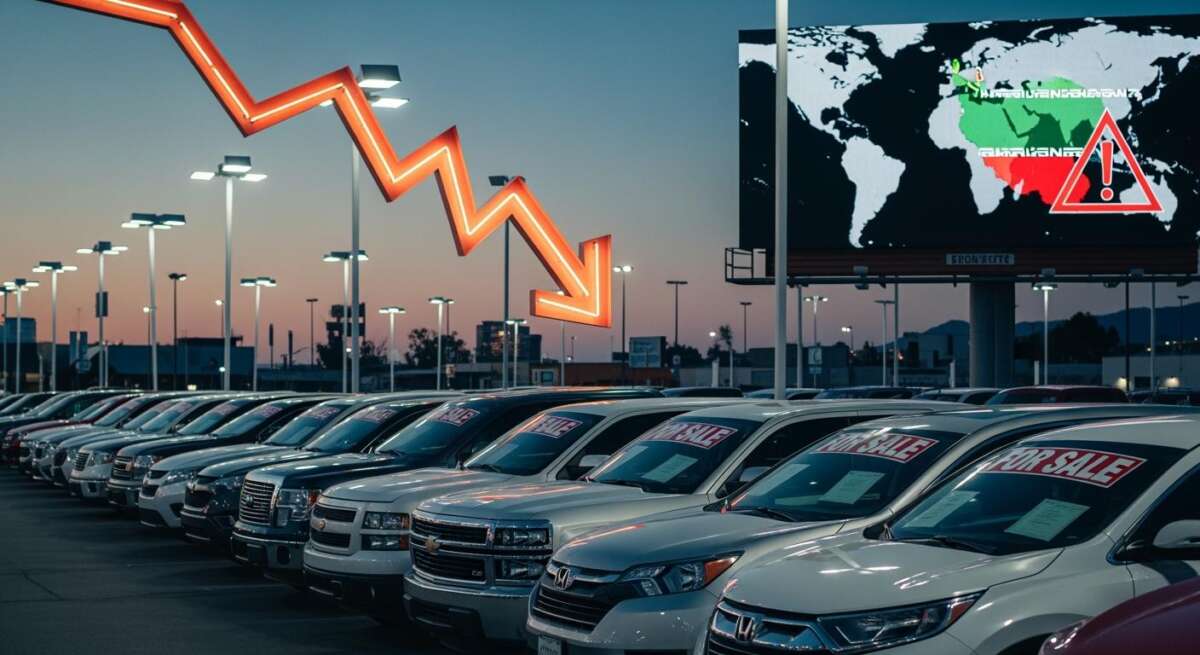
You may notice that truck and SUV sales could drop during the Iran conflict. High oil prices make driving suvs and trucks more expensive. People often switch to smaller cars when gas prices rise. In 2008, sales fell as fuel costs climbed. The Iran conflict can push up fuel costs fast, affecting what you choose to drive.
Evidence | Description |
|---|---|
Rising gas prices impact demand | When gas prices go above $3.10, demand for trucks and suvs drops. In 2008, sales of larger vehicles fell as prices passed $4. |
Key Takeaways
High oil prices can cause fewer trucks and SUVs to sell. When gas costs more, people pick smaller cars that use less fuel.
The Iran conflict can mess up oil supply. This can make gas prices go up fast. Watch news about oil prices and the Strait of Hormuz.
Economic uncertainty makes people not want to buy big vehicles. If you feel worried about money, you may wait to buy a new truck or SUV.
Automakers change what they do when the market shifts. They offer more deals and change how many cars they make. Look for cash back or lower prices when sales drop.
Think about hybrids or electric cars as other choices. These cars can help you save money on gas. They may get more popular when oil prices are high.
Iran Conflict and Oil Prices
Oil Supply Disruptions
The Iran conflict causes big problems for oil supply. The Strait of Hormuz is a thin waterway. It links the Persian Gulf to other countries. About 20% of the world’s oil goes through this strait. Each day, almost 20 million barrels of crude oil pass through. The strait also moves about 22% of liquefied natural gas exports. When there is conflict in Iran, ships move slower or stop in the strait. This makes oil prices jump around and supply chains less steady.
A fire started at a Saudi Aramco refinery. This happened when missile debris from Iran hit it.
Closing the Strait of Hormuz made supply problems worse. This caused the market to change quickly and oil prices to go up.
The Strait of Hormuz is like a narrow gate for oil. If there is fighting, oil cannot get through easily. Prices can rise fast and without warning.
Gas Price Spikes and Truck and SUV Sales
Gas prices hurt more if you drive trucks or suvs. When oil prices rise, gas prices go up too. The Iran conflict made oil prices higher after trouble in the strait. European gas prices reached their highest since 2022. On one Monday, oil prices jumped by 8.2%. This shows how quickly things can change.
Evidence Type | Details |
|---|---|
Price Increase | European gas prices went up to their highest since Russia’s invasion of Ukraine in 2022. |
Oil Price Spike | Oil prices jumped 8.2% in one day, showing the market is unstable. |
Economic Impact | Higher oil prices mean more costs for families and businesses, which can hurt the economy. |
When gas costs $4 per gallon, fewer people buy big vehicles. Sales of trucks and suvs drop by over 20%. People do not want to pay more for gas. In 2008, GM’s Hummer brand sold fewer cars as oil prices rose. Many people bought smaller, fuel-saving cars instead. When gas prices go down, more people buy suvs and trucks again. For example, Fiat Chrysler’s sales went up 52% and Jeep suvs rose 36% in one month after gas prices fell.
High oil prices make trucks and suvs less popular.
You might wait to buy a new car or pick a smaller one.
Impact on Detroit Automakers
Detroit automakers rely a lot on selling trucks and suvs. These vehicles make them a lot of money, but they also bring risks. When oil prices go up because of trouble in the strait, it costs more to make cars. Fewer people want to buy big vehicles, so sales drop. Stellantis, a big car company, lost 20.1 billion euros. This shows the car business can be weak when oil prices change fast.
Making cars costs more when oil prices rise.
Fewer people want to buy trucks and suvs.
Car companies use lots of energy, so they are hurt by oil price changes.
Detroit automakers mostly sell big vehicles now. They stopped making many cheap cars and affordable electric cars. This plan can backfire when oil prices rise. It is harder for them to compete with other countries. Their share of the U.S. market fell to 9.6% in early 2025, down from 10.9% before. Oil price problems in the strait make it harder for them to do well.
If you want to buy a truck or suv, watch oil prices and what happens in the Strait of Hormuz. Car companies may change what they sell if oil supply stays shaky.
Economic Uncertainty and Auto Market
Delayed Purchases of Trucks and SUVs
When there is trouble in the world, people wait to buy big things. The Iran conflict makes many people unsure about getting a new truck or SUV. Some worry prices will go up or they might lose their jobs. This makes people spend less money. Some shoppers skip cars that might get tariffs. You may look for cars made in the U.S. to save money. Japanese automakers often sell more cars because they have fewer tariffs. This shows that politics and the economy change what people buy.
People buy less when the economy is shaky.
Buyers want to know where cars are made.
Brands with fewer tariffs sell more cars.
Supply Chain and Production Challenges
Problems in the supply chain make it hard to get new cars. The Iran conflict slows down shipping. Cargo moves slower by land, air, and sea. Big shipping companies take fewer orders and ships go different ways. This adds weeks to delivery times. Higher energy costs make building cars more expensive. Late shipments from Asia hurt factories in Germany, the UK, the U.S., and Mexico. These problems mean fewer trucks and SUVs at car lots. Car makers must change their plans to deal with these issues.
Problems in the supply chain can mean not enough cars and higher prices.
Inflation and Consumer Confidence
Inflation makes trucks and SUVs cost more. It costs more to build cars, so fewer new ones are made. Used cars cost more because there are not enough new ones. If your pay does not go up, it is harder to buy a car. People feel less sure about spending money when prices rise. The Consumer Confidence Index dropped by 3.7% in September. This means people are less likely to buy cars. When people feel worried, they spend less, especially on big things like trucks and SUVs. Car companies see their sales go down when people cannot afford cars.
Factor | Impact on Truck and SUV Sales |
|---|---|
Inflationary pressure | Higher prices, less demand |
Supply chain disruption | Fewer vehicles, delays |
Consumer confidence | Lower sales, cautious buyers |
Car companies watch these changes closely. They change their sales plans when the economy is uncertain. Even if sales were good in 2025, experts worry about 2026. High prices and supply problems may mean fewer people want trucks and SUVs.
Shifting Preferences in Truck and SUV Sales
Move to Fuel-Efficient Cars
When gas prices go up, people want different cars. Many look for cars that use less gas to save money. Small cars become more popular because they cost less to drive. Truck and suv sales drop when gas costs more than $3.10 per gallon. Fewer people want big vehicles, and more want cars that save fuel.
Even when oil prices rise, light trucks still make up 58.8% of sales. This means many people still like these vehicles.
Hybrid, diesel, and electric cars sometimes sell less than before, even though they use less gas.
When gas prices change a lot, you may think about your choices. You might pick a smaller car instead of a truck or suv.
Rise of Hybrid and Electric Options
You hear about hybrids and electric cars as other choices. When things are uncertain, some people think about these cars. Some wait to buy hybrids or EVs because they worry about world events.
Half of car buyers around the world want internal combustion engine vehicles next. This is 13% more than in 2024.
In the U.K., 41% of people now want ICE vehicles.
Fewer people in the U.K. want EVs, dropping from 23% to 19%.
Hybrid car demand also dropped from 27% to 19%.
Around the world, fewer people want EVs and hybrids than in 2024.
36% of people who wanted EVs are now waiting or changing their minds because of problems.
When there is conflict, you may feel unsure about new cars. This can slow down how fast people switch to hybrids and EVs.
Long-Term Changes in Buying Habits
Big changes in the market can last a long time. You might buy used cars instead of new ones because new cars cost more. Certified Pre-Owned cars become a good way to save money.
Some people buy used cars for the first time, even if they usually buy new.
Wealthy buyers pick slightly used luxury cars to avoid high tariffs.
Rental companies keep cars longer or buy used ones instead of new.
In Canada, more people buy used cars and keep them longer.
Car companies watch these changes and try to plan ahead. They check their supply chains and keep extra parts to avoid problems. Companies work on new ways to use fewer rare materials. The European Union tries to get materials from inside Europe.
You see how world events change what you buy. Car companies change too, so they can keep up with new problems.
Market Responses to the Iran Conflict
Dealer Incentives and Promotions
Dealers give more deals when truck and SUV sales slow down. These deals help you save money and make buying easier. You might see 0% APR or cash back offers. For example, Ram gives up to $5,000 cash back on some Ram 1500 trucks. Dealers offer bigger deals in places with too many cars. New car deals are now the highest in three years. July was the tenth month in a row with lower prices than last year. This means dealers need to work harder to get buyers.
0% APR and cash back deals
Lower prices for new cars
The report says automakers use discounts to keep sales steady. These deals do not work as well as before. It can be harder to find a good deal, especially for trucks and SUVs.
Adjusting Production Strategies
Automakers change their plans to deal with the Iran conflict. They look at where they get petrochemical feedstocks from the Gulf. They check how many suppliers they use to avoid problems. They review how they buy energy at big sites. Automakers try to use more local suppliers and different energy sources. They keep extra parts and supplies for future problems.
Looking for supply chain risks
Checking how they buy energy
Using more local suppliers
Keeping extra supplies
Automakers change what they make when oil prices go up. They build more fuel-efficient cars when people want to save gas.
Key Findings | Description |
|---|---|
Oil Price Impact | Higher oil prices make people want cars that use less gas. |
Manufacturer Response | Automakers change what they build when people want different cars. |
Marketing Fuel-Efficient Models
Automakers talk more about fuel-efficient cars when oil prices rise. They show you how much money you can save on gas. Ads focus on lower gas costs and better mileage. Automakers say hybrids and electric cars are smart picks. You see more info about these cars online and at car lots. This helps you compare cars and choose what you need.
Automakers change their ads when people want different cars. You get more choices and info about fuel-efficient cars.
You see how the Iran conflict can push oil prices higher and make people rethink buying trucks and SUVs. High gas prices, economic worries, and new car trends all play a role. You should watch for changes in the Strait of Hormuz, market swings, and supply chain problems. These global events shape what you drive and what automakers build next.
Watch for news about the Strait of Hormuz and oil prices.
Expect market changes and possible supply shocks.
Notice how trade and shipping routes affect car choices.
FAQ
What happens to truck and SUV sales when gas prices rise?
You see fewer people buying trucks and SUVs. High gas prices make these vehicles expensive to drive. Many buyers switch to smaller, fuel-efficient cars.
Why do automakers focus on trucks and SUVs?
Automakers earn more profit from trucks and SUVs. These vehicles cost more and sell well when gas prices are low. Detroit brands rely on them for most of their sales.
How does the Iran conflict affect oil prices?
The Iran conflict can disrupt oil supply routes. Oil prices often rise quickly when supply drops. You pay more at the pump, and car costs go up.
Should you wait to buy a truck or SUV?
You may want to wait if gas prices keep rising. Dealers offer more incentives during slow sales. Watching oil prices helps you make a smart choice.
Are there alternatives to trucks and SUVs?
You can choose hybrids, electric cars, or smaller vehicles. These options use less fuel and save money. Many automakers now offer more fuel-efficient models.
See Also
The Best Source for Authentic Honda Parts Available Online
Exploring Investment Opportunities in Southeast Asia’s EV Sector