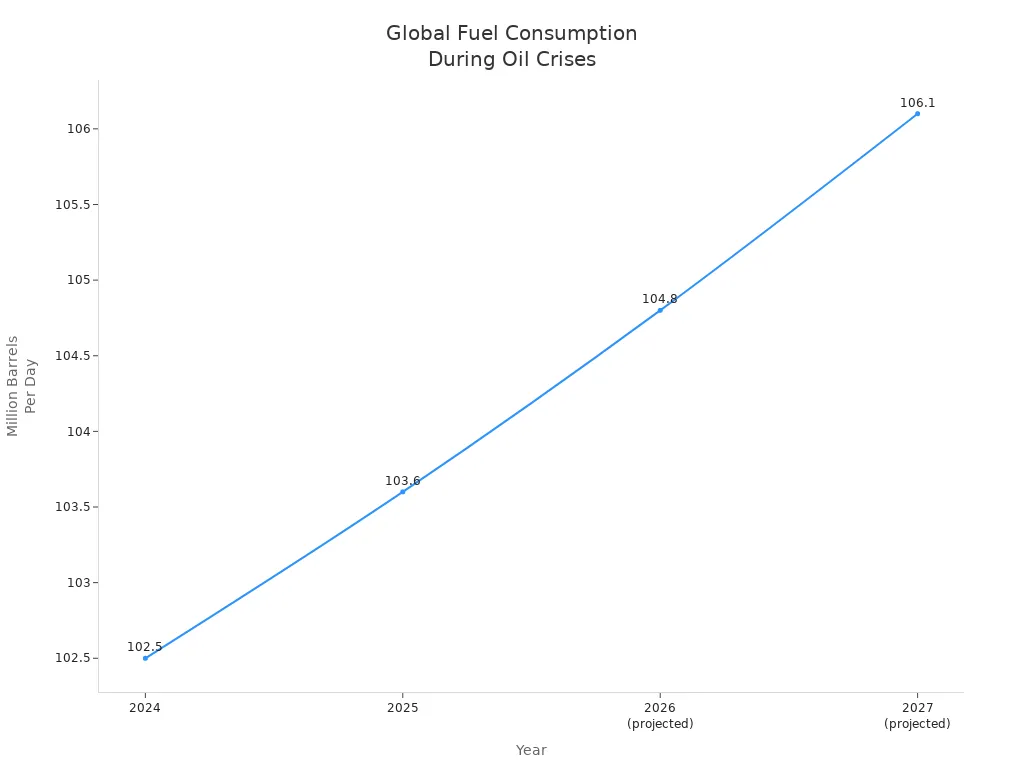
You want to save fuel every time you fill up. The oil crisis makes this more important than ever. Just look at how global oil use keeps rising:
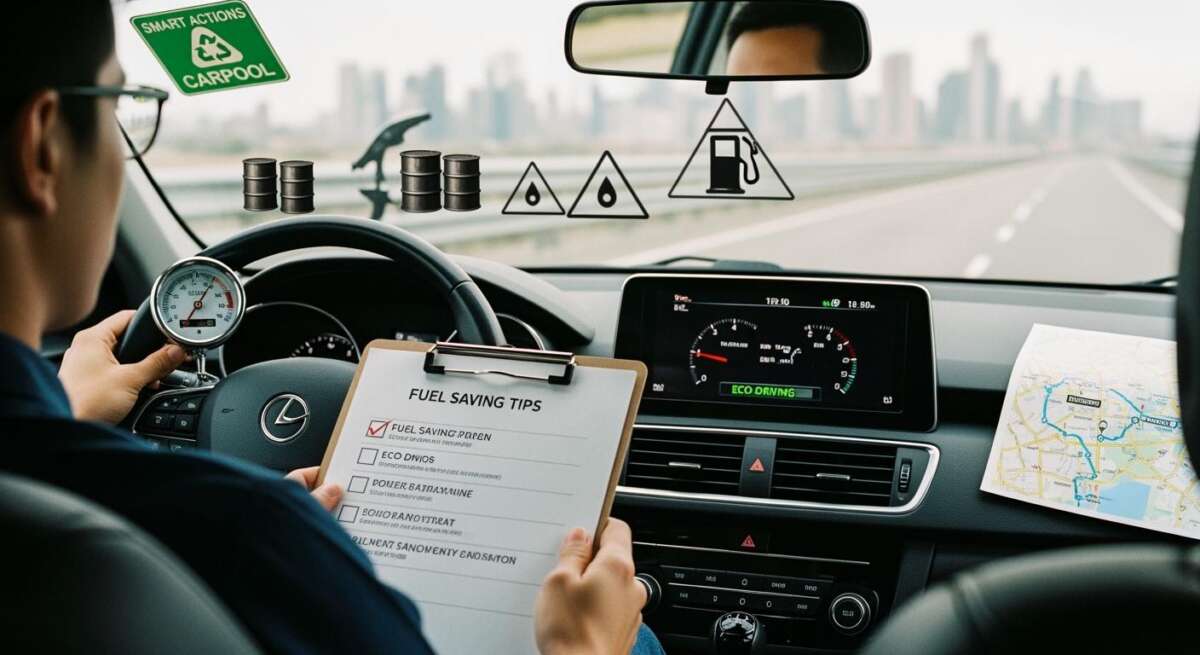
Simple tips can help you save fuel now. You can drive smart, save fuel, and cut your oil use. Try these tips to save fuel and keep more oil in the tank.
Key Takeaways
Keeping your car in good shape helps use less fuel. Checking tire pressure and changing air filters is important. These steps make your car run better and save gas.
Driving smart can help you save a lot of fuel. Try not to let your car idle. Use cruise control when you can. These habits can save you 15% to 30% on fuel.
Plan your errands before you leave home. Try to do many errands in one trip. This means you take fewer trips and start your car less often. It helps your car use less fuel.
Vehicle Maintenance for Saving Fuel
You want to use less gas, right? Taking care of your car helps you do that. If you keep up with maintenance, you can save money and gas. Simple steps make your car work better.
Small changes can make your car greener.
Tune-ups like new air filters and spark plugs help your engine.
A good engine uses less gas and wastes less.
Keep Tires Properly Inflated
Tires are important for saving gas. If you check your tire pressure often, you help your car roll easier. This means your car needs less gas to move. If your tire pressure drops by 1 psi, you lose about 0.2% in gas mileage. Checking your tires and keeping them full saves gas and makes your tires last longer.
Right tire pressure helps your car use less gas.
If tire pressure drops by 1 psi, you pay about 0.4% more for gas.
Checking tires saves gas and keeps you safe.
Regular Engine Checks
A healthy engine uses less gas. If you check your engine often, you stop problems that waste gas. Dirty air filters, old spark plugs, or clogged fuel injectors make your car use more gas. You should change your oil, get new air filters, and have tune-ups when needed. These things help your engine use gas the right way and give you better mileage.
Maintenance Task | Impact on Fuel Consumption |
|---|---|
Keeping tires properly inflated | Helps your car roll easy and saves gas |
Replacing dirty air filters | Lets air flow well and saves gas |
Regular engine diagnostics | Stops problems and lowers gas use |
If you want to use less gas, just take care of your car and do these easy things. You will get better mileage and spend less money on gas.
Smart Driving Habits to Save Fuel
You can save a lot of fuel just by changing the way you drive. Eco-driving is all about making smart choices behind the wheel. These simple habits help you get more miles from every gallon and keep your wallet happy.
Avoid Idling
When you let your car idle, you waste fuel. The engine keeps running, but you are not moving. If you wait in your car for a long time, turn off the engine. Modern cars start up quickly, so you do not need to keep them running. Did you know that one hour of idling can use up to a gallon of fuel? That adds up fast, especially in city traffic. Eco-driving means you switch off the air conditioning and engine when you stop for a while. This habit helps you save fuel and cut down on pollution.
Tip: Avoid congested areas when possible. Less time in traffic means less idling and more fuel saved.
Use Cruise Control
Activate cruise control when you drive on highways. This feature keeps your speed steady and helps you avoid sudden changes in speed. When you activate cruise control, you use less fuel because your car does not speed up or slow down too much. Eco-driving experts say that maintaining a constant speed is one of the best ways to boost fuel efficiency. You will notice that driving more efficiently with cruise control also makes your ride smoother.
Drive at Moderate Speeds
If you reduce your speed, you use less fuel. Driving at moderate speeds, like 55 mph, can improve your fuel economy by up to 43% compared to driving at 75 mph. When you drive faster, your car faces more air resistance, and the engine works harder. Try to avoid sudden changes in speed, and keep your pace steady. Eco-driving means you drive at a safe, moderate speed and switch off the air conditioning when you do not need it. Driving more efficiently and keeping your speed in check will help you save fuel every time you hit the road.
Smart driving habits like these can save you 15%–30% on highways and up to 40% in stop-and-go traffic.
Simple changes in your driving habits can make a big difference for your fuel budget and the environment.
Reduce Unnecessary Trips to Save on Fuel
You can save on fuel by making fewer trips. Every time you drive, your car uses fuel, so cutting down on trips helps a lot. Think about your week. Do you make many short drives? You can change that with a little planning.
Plan and Combine Errands
Try to plan your route before you leave home. Make a list of what you need to do. You can group errands that are close together. This way, you drive less and use less fuel. If you plan your route, you avoid backtracking and wasting time. You also get more done in one trip.
Tip: Leave on time so you do not rush. When you rush, you might take longer routes or forget something. That means you use more fuel.
Here are some ways to make your trips smarter:
Combine shopping, picking up kids, and other errands into one trip.
Choose the shortest route for all your stops.
Leave on time to avoid traffic and save fuel.
Minimize Cold Starts
Cold starts happen when your engine is cool. Your car uses more fuel during the first few minutes after starting. If you make many short trips, you have more cold starts. You can cut down on these by combining errands.
Combine errands into a single trip to reduce cold starts.
Fewer cold starts mean better fuel efficiency.
Your engine stays warm, so you use less fuel.
Saving fuel gets easier when you plan your route and think ahead. You help your wallet and the planet at the same time.
Manage Load and Tire Pressure for Fuel Efficiency
Lighten Your Vehicle’s Load
You can save more fuel when you lighten your load. Every extra pound in your car makes your engine work harder. If you remove heavy items from your trunk or back seat, you help your car use less fuel. For example, if you reduce your car’s weight by 20%, you could improve your fuel mileage by up to 16%. That means you get more miles for every gallon and spend less at the pump.
Tip: Take out sports gear, tools, or boxes you do not need every day. Roof racks and carriers also add weight and wind resistance, so remove them when you are not using them.
When you lighten your load, you make your car more efficient. You also help your tires and brakes last longer. Small changes can make a big difference for your wallet and the planet.
Check Tire Pressure Often
Tire pressure matters a lot for fuel savings. Under-inflated tires create more rolling resistance, so your engine uses more fuel. If your tire pressure drops by just 1 psi, your fuel costs can go up by about 0.4%. That adds up over time.
Evidence Description | Impact on Fuel Efficiency |
|---|---|
Proper tire inflation reduces rolling resistance | Directly decreases fuel consumption |
Under-inflated tires create more rolling resistance | Forces engine to work harder, increasing fuel consumption |
You should check your tire pressure at least once a month and before long trips. Many drivers find it easy to check tire pressure when filling up at the gas station. Adjust your tires if the weather changes, because temperature can affect pressure.
Check tire pressure monthly.
Inspect before long trips.
Adjust for hot or cold weather.
Keeping your tires at the right pressure helps you save fuel and keeps you safe on the road.
Alternative Transportation for Saving Fuel
You do not have to drive alone every day. You can choose smarter ways to get around and save fuel. Let’s look at some options that help you cut down on gasoline use and keep more money in your pocket.
Carpooling and Ride-Sharing
Carpooling is a simple way to save fuel. When you share a ride with friends, family, or coworkers, you use less gasoline. You also split travel costs, which helps everyone save money. If just one more person joins every 100 cars, the U.S. could save up to 820 million gallons of gasoline each year. That is a huge impact!
Ride-sharing apps make it easy to find people going the same way. You can meet new friends and enjoy good company on your commute. Sharing rides also means fewer cars on the road, which helps reduce traffic and lowers emissions. You help the planet and your wallet at the same time.
Tip: Try setting up a carpool group at work or in your neighborhood. You will notice the savings add up quickly.
Hybrid Cars and Public Transit
You can also switch to a fuel-efficient vehicle like a hybrid. Hybrids use less fuel and produce fewer emissions. They are a smart choice if you want to drive but still care about the environment.
Public transportation is another great option. Buses, trains, and subways move many people at once, so each person uses less fuel. You can relax, read, or listen to music while someone else drives. If you live close to work or school, you can walk, bike, or even use an electric scooter. These choices help you save fuel and stay healthy.
Here are some practical ways to cut down on fuel use:
Take public transportation when possible
Walk or bike for short trips
Use ride-sharing apps
Try an electric scooter for quick errands
You have many choices. Pick the ones that fit your life and start saving fuel today.
You can save money on gas by making smart choices each day. Here are five easy ways to use less fuel:
Strategy | Description |
|---|---|
Drive smarter | Do not idle and avoid quick moves |
Maintain your car | Keep tires filled and engine in good shape |
Plan trips | Group errands and have fewer cold starts |
Lighten your load | Take out heavy stuff and check tire pressure |
Try alternatives | Carpool, ride the bus, or walk |
If you use these habits, you will use less fuel and save money. Many people see that driving steady and caring for their car helps with high gas prices. You can also talk to friends and neighbors about ways to save fuel. Sharing ideas helps everyone deal with high gas prices. Stay active and help your community save fuel together!
FAQ
How often should you check your tire pressure to save fuel?
You should check your tire pressure every month. This helps your car use less fuel and keeps you safe on the road.
Does using air conditioning use more fuel?
Yes, using air conditioning can make your car use more fuel. Try opening your windows when driving slowly to save fuel.
What is the easiest way to start saving fuel today?
You can start by driving at steady speeds and planning your trips. These simple steps help you use less fuel right away.
See Also
Exploring Investment Opportunities in Southeast Asia’s EV Sector