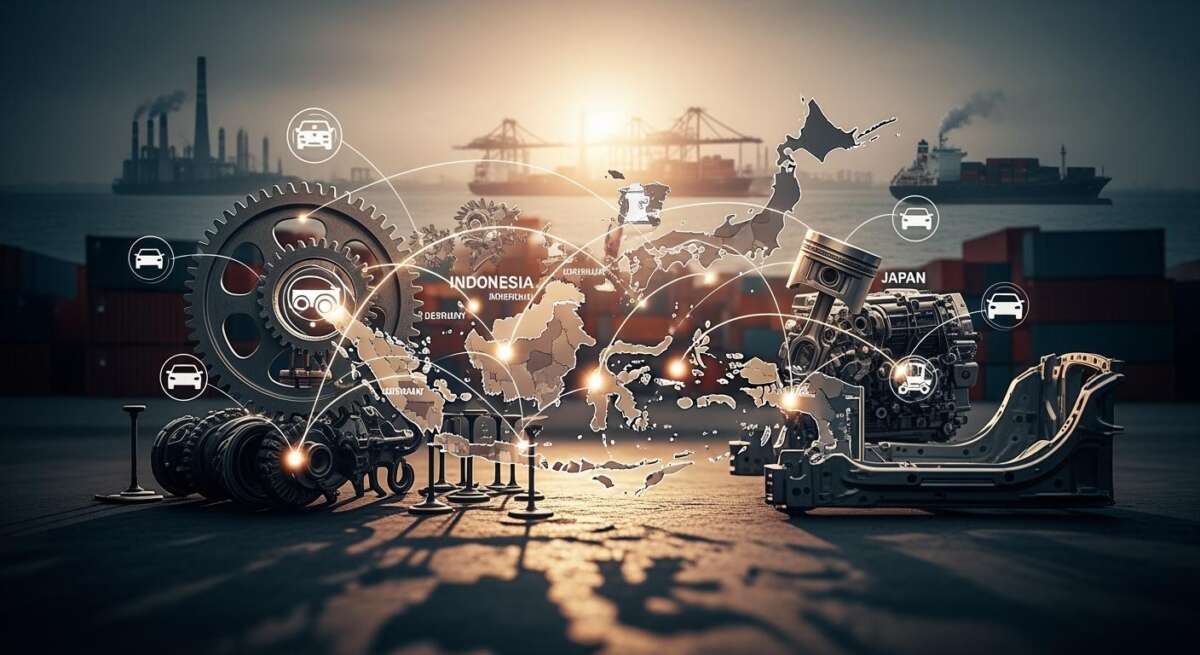
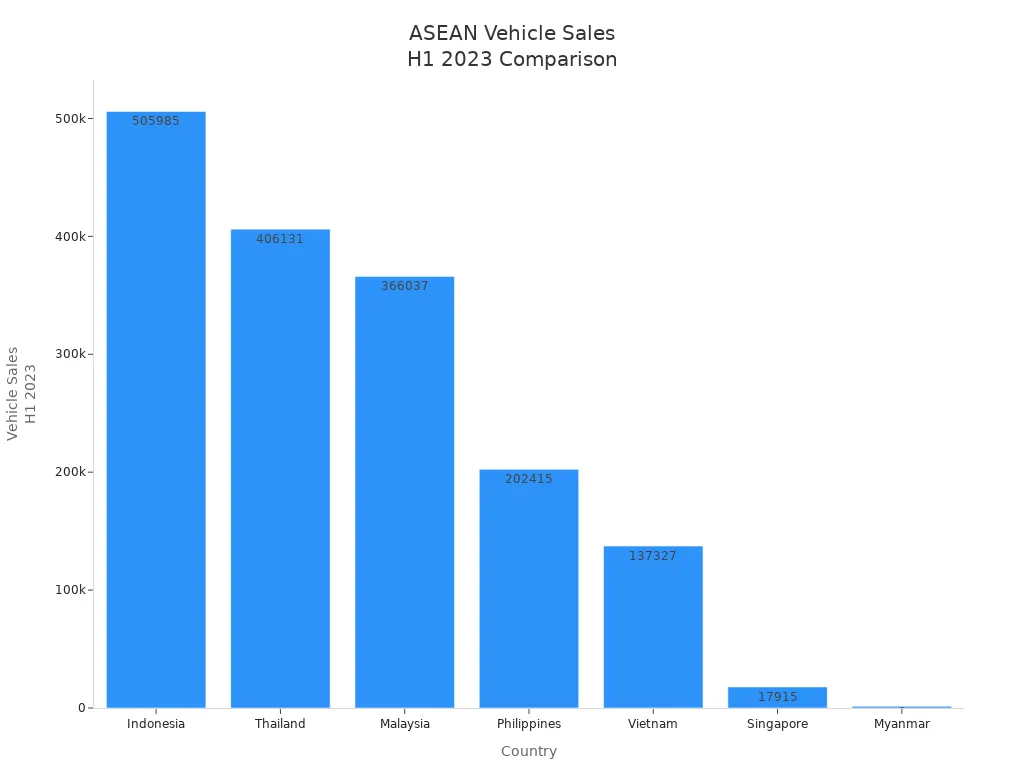
You can see Indonesia is becoming important in the Global Automotive Supply Chain. In 2023, Indonesia made 1.18 million vehicles. These included passenger cars, motorcycles, and electric vehicles. Indonesia sold more vehicles than Thailand in the first half of 2023.
Country | Vehicle Production (2023) | Vehicle Sales (H1 2023) |
|---|---|---|
Thailand | 1.84 million | 406,131 |
Indonesia | 1.18 million | 505,985 |
Malaysia | N/A | 366,037 |
Philippines | N/A | 202,415 |
Vietnam | N/A | 137,327 |
Singapore | N/A | 17,915 |
Myanmar | N/A | 1,380 |
Indonesia is strong in making things, exporting, and working with others in the supply chain. Think about how Indonesia affects the global automotive industry now and in the future.
Key Takeaways
Indonesia made 1.18 million vehicles in 2023. It sold more cars than Thailand. This shows Indonesia is becoming more important in the car market. – Japanese companies invest a lot in Indonesia’s car industry. For example, Toyota spent $2 billion. This helps factories make more cars and send more cars to other countries. – The government gives tax breaks and rewards for electric vehicles. These rules help Indonesia’s car industry grow. – Indonesia is in a good spot on the map. It has strong shipping routes. This helps it send cars to other countries easily. It is now a big part of the Global Automotive Supply Chain. – More electric vehicles are being made in Indonesia. New factories and better roads help with this. Indonesia is becoming a leader in the EV market.
Indonesia’s Manufacturing Powerhouse
Industry Growth
Indonesia’s automotive industry is growing quickly. The sector now gives more than 10% to Indonesia’s GDP. In 2017, Indonesia was the 17th-largest passenger vehicle maker in the world. It was also the 5th-largest in Asia. In 2019, the industry exported 26% of what it made. Daihatsu makes 530,000 cars each year. This is 40% of all vehicles sold in Indonesia.
Factories in Indonesia keep getting bigger. There are more jobs and new machines in local plants.
Japanese Investment
Japanese companies are important in Indonesia’s automotive sector. Toyota spent $2 billion in 2019. Honda spent $360 million that same year.
Company | Investment Amount | Year |
|---|---|---|
Toyota | $2 billion | 2019 |
Honda | $360 million | 2019 |
These investments bring better manufacturing and help exports grow.
Government Policy
The government helps the industry with smart rules. There are tax discounts for cheaper vehicles. There are also incentives for nickel-based batteries. Indonesia will give incentives to hybrids in the future. The country starts big projects for cleaner fuels and better logistics.
Policy Aspect | Description |
|---|---|
Tax Discounts | Lower taxes for affordable vehicles and new energy vehicles |
Battery Supply Chain | Extra discounts for nickel-based batteries |
Inclusion of Hybrids | Hybrids will get incentives in 2026 |
Downstream Industrial Projects | New projects for aluminum, bio-fuel, and clean energy |
Logistical Enforcement | Technology trials to improve truck logistics |
Regional Production Base
Indonesia is a hub for Southeast Asia. The country exports 26% of its vehicles. Daihatsu makes 530,000 cars every year. Factories in Indonesia supply cars to many countries nearby.
Global Brands in Indonesia
Many global brands make cars in Indonesia. Toyota’s plant makes 230,000 vehicles each year. Mitsubishi’s factory has made 1,000,000 vehicles so far.
Brand | Manufacturing Operation in Indonesia | Production Capacity (vehicles annually) |
|---|---|---|
Toyota | PT. Toyota Motor Manufacturing Indonesia (TMMIN) | 230,000 |
Mitsubishi | PT Mitsubishi Motors Krama Yudha Indonesia (MMKI) | 1,000,000 (cumulative) |
Japanese Manufacturers
Japanese brands are the most popular. They have 82.9% of the market in 2025. This is a little less than before.
Japanese brands are liked for sales and exports.
Commercial Vehicles
Indonesia makes commercial vehicles for many jobs. Tata Yodha and Tata Ultra T.7 models help farms and supply chains.
Vehicle Model | Quantity | Primary Role |
|---|---|---|
Tata Yodha | 35,000 | Farm-to-market transport and last-mile delivery |
Tata Ultra T.7 | 35,000 | Regional goods movement and supply chain support |
Emerging International Brands
New brands come to Indonesia with smart plans. Toyota works with Astra International and Kalla Group to promote EVs. Hyundai builds a plant to lower costs and help electric mobility. BYD teams up with Arista Group for better distribution.
You see more options and new ideas as these brands invest in Indonesia.
Indonesia in the Global Automotive Supply Chain
ASEAN Integration
Indonesia works with other ASEAN countries. This region is a strong network for making cars. Indonesia’s share of global nickel supply is getting bigger. The government wants to be the third biggest electric battery maker by 2027. They plan for 20% of new vehicles to be electric by 2025. By then, electric vehicles will be 20% of all vehicle exports.
Working with ASEAN helps Indonesia export more cars.
Rules on raw material exports, like nickel, help local factories.
These rules bring in money for EV batteries and car factories.
Indonesia’s part in the Global Automotive Supply Chain grows as it teams up with ASEAN. This means better production and more chances to export.
Cross-Border Supply Chains
Indonesia uses ships to move car parts. The main route goes from Jakarta to Laem Chabang in Thailand. This route helps factories keep making cars on time. Jakarta’s port can handle heavy loads. Laem Chabang has good logistics.
Battery shipments go between Vietnam, Thailand, Malaysia, and Indonesia.
Good logistics help electric vehicle factories grow.
Cross-border supply chains make Indonesia important in the Global Automotive Supply Chain. Parts move faster and it is easier to reach other markets.
Component Sharing
Indonesia and nearby countries share car parts to work better. Factories are close together to save on transport costs. This makes things more efficient and saves money. When factories are close, workers get paid more and the area grows. This helps factories make more and helps the local economy.
Theory | Description | Impact on Production Efficiency |
|---|---|---|
Agglomeration Theory | Industries cluster to reduce transportation costs | Enhances efficiency through reduced logistics expenses |
Spatial Concentration | Benefits of clustering include increased wages and growth | Leads to improved production capabilities and economic benefits for surrounding areas |
Sharing parts helps you get products faster and for less money.
Trade Agreements
Trade agreements make it easier to sell and buy cars. These deals lower trade barriers and remove tariffs. This makes cars cheaper and helps companies compete. If Indonesia accepts UNECE type-approval, EU cars can be sold faster and cheaper. Support for Indonesia’s technical skills helps match rules with other countries.
Key Elements | Impact on Automotive Trade |
|---|---|
Reduction of trade barriers | Facilitates smoother exports and imports of vehicles between the EU and Indonesia |
Elimination of tariffs | Lowers costs for automotive products, enhancing competitiveness |
Recognition of UNECE type-approval | Reduces compliance costs and time-to-market for EU vehicles in Indonesia |
Support for Indonesia’s technical capacity | Aids in aligning Indonesia’s regulations with international standards, benefiting both markets |
Trade agreements help you reach more markets and improve the Global Automotive Supply Chain.
Strategic Location
Indonesia is in a great spot for the car industry. The country has the most nickel in the world. Nickel is very important for electric vehicles. Indonesia’s share of global nickel will go from 46% in 2022 to about 60% by 2025-30. In 2022, Indonesia got $22 billion in foreign investment. Most of this money went to factories.
Indonesia’s location helps the Global Automotive Supply Chain.
You get more resources and chances to invest.
Asia-Pacific Access
Indonesia gives good access to the Asia-Pacific car market. The government supports electric vehicles and builds new infrastructure. The population is big and keeps growing. More people want to buy cars. Big car companies build factories and do research in Indonesia for electric and hybrid cars. The country wants clean transportation and more exports.
Indonesia’s market helps you find more customers.
You get new technology and more chances to export.
Shipping Routes
Indonesia’s shipping routes help send cars to other countries. The country is along important routes like the Malacca Strait. Big ports like Tanjung Priok and Tanjung Perak are getting better at handling cargo. Good shipping lanes help international trade and are important for car exports.
Key Factor | Description |
|---|---|
Strategic Positioning | Indonesia is located along critical shipping routes like the Malacca Strait, enhancing trade. |
Modernized Port Infrastructure | Upgrades at major ports like Tanjung Priok and Tanjung Perak improve cargo handling efficiency. |
Economic Significance | Efficient shipping lanes support international trade, crucial for automotive exports. |
Shipping routes make Indonesia a strong part of the Global Automotive Supply Chain.
Port Infrastructure
Indonesia’s ports are ready for car exports. Patimban Port can handle 250,000 finished vehicles now. Plans will let it handle 485,000 vehicles later. The port has a special area just for cars, bigger than the container area. Patimban Port uses new technology to cut ship waiting times. The design lets workers load and unload faster. Exporters pay less for shipping.
Patimban Port can handle up to 7.5 million TEUs each year when finished.
The port moves cars, goods, and farm products.
New facilities mean lower costs and faster shipping.
Good port infrastructure helps you export cars quickly and easily.
Parts Manufacturing Ecosystem
Supplier Tiers
There are three main supplier tiers in Indonesia. Tier-1 suppliers make parts for car makers. Tier-2 suppliers give parts to Tier-1 companies. Tier-3 suppliers provide raw materials. Each tier is important in the Global Automotive Supply Chain.
Tier-1: Makes parts for car makers.
Tier-2: Gives parts to Tier-1 suppliers.
Tier-3: Supplies raw materials for the industry.
OEM Manufacturers
OEM manufacturers build original parts for new vehicles. These parts match the car maker’s standards. They work with global brands and local factories. OEM parts help keep vehicles running well.
OEM manufacturers help car makers with good parts and strong teamwork.
Aftermarket Producers
Aftermarket producers make parts for repairs and upgrades. You can buy these parts after you get a vehicle. Aftermarket parts give you more choices and help save money. Many local companies focus on making aftermarket parts.
Local vs Multinational Suppliers
Indonesia has both local and multinational suppliers. Local suppliers know the market and give fast service. Multinational suppliers bring new technology and global standards. You can pick the supplier that fits your needs.
Supplier Type | Strengths | Market Reach |
|---|---|---|
Local | Fast service, market knowledge | Domestic |
Multinational | Advanced tech, global standards | International |
Key Components
Indonesia makes many important automotive components. These parts help the Global Automotive Supply Chain and support car makers.
Engine & Drivetrain
Engine and drivetrain parts power vehicles. Indonesian factories make engines, transmissions, and axles. These parts help cars run well.
Suspension & Chassis
Suspension and chassis parts keep vehicles steady. Indonesia makes springs, shock absorbers, and frames. These parts make cars safer and more comfortable.
Electrical Components
Electrical components control lights, sensors, and power systems. Indonesian suppliers make wiring, batteries, and electronic modules. These parts help cars use new technology.
Body & Interior
Body and interior parts shape how vehicles look and feel. Indonesian factories make doors, seats, dashboards, and panels. These parts make vehicles comfortable and stylish.
You can trust Indonesia’s parts manufacturing ecosystem for quality, variety, and value.
Global Supply Chain Competitiveness
Labor & Cost Advantage
Indonesia has low labor costs. These costs are the lowest in Southeast Asia. They are even lower than Vietnam’s labor costs. Labor costs are about one-fifth of China’s. This helps companies spend less on making things. Many businesses pick Indonesia to save money.
Cost Comparison
Indonesia’s manufacturing costs are much lower than China’s. They are also lower than Thailand’s costs. Companies can offer cheaper prices because of these savings. This helps businesses grow and find more customers.
Currency Impact
The Indonesian rupiah stays steady against other currencies. This makes it easier to plan costs and budgets. When the currency does not change much, expenses stay predictable. Exporters can set prices for buyers in other countries.
Scalable Production
Factories in Indonesia can grow bigger. Many factories have space to add new lines. The government gives support and builds new infrastructure. This makes it easy to make more products when needed.
Supply Chain Efficiency
Indonesia’s supply chain works well. Better manufacturing and strong trade relations help exports grow. Free Trade Agreements lower trade barriers. This makes Indonesian products more competitive. Goods move faster and reach more markets.
Supplier Clustering
Suppliers are close to factories in Indonesia. This helps companies get parts quickly. Transport costs are lower because of this setup. Deliveries are faster and teamwork improves. Supplier clustering also helps local jobs and skills.
Lead Times
Short lead times help companies respond quickly. Suppliers and factories work closely together. Products are made and delivered faster. This speed gives Indonesia an advantage in the Global Automotive Supply Chain.
Export-Oriented Production
Indonesia focuses on selling products to other countries. Many factories are built for international markets. Ports and shipping routes help exports move fast and reliably. Companies can trust Indonesia to deliver products on time.
Alternative Sourcing Hub
JDM Supply Constraints
It can be hard to get Japanese Domestic Market parts. Japan sometimes keeps more parts for itself. This happens when people in Japan need a lot or factories are slow. You might have to wait longer and pay more for JDM parts. Indonesia is another place to get parts. Indonesian suppliers can help you get what you need. This helps you avoid running out of parts.
Price Differences
Parts from Indonesia and Japan do not cost the same. Indonesian companies pay workers less and spend less on making parts. This means prices are lower. You can save money if you buy from Indonesia. Many people pick Indonesia for big orders. You can look at prices and pick what fits your budget.
Source | Average Price (USD) | Lead Time (Days) |
|---|---|---|
Japan (JDM) | $120 | 45 |
Indonesia | $85 | 28 |
Availability Challenges
Getting parts from Indonesia can be tricky. Some problems are:
High shipping costs because roads and ports need work.
Hard rules and lots of paperwork.
Strikes and rules about the environment can slow things down.
You can fix these problems by picking good suppliers. You should also use trusted shipping companies.
Backorder Issues
Sometimes you have to wait for popular parts. Indonesian suppliers often keep more parts ready to ship. This means you do not have to wait as long. You can order the amount you need. Restocking is faster too.
You have more control over your supply chain when you buy from different places.
International Demand
More people around the world want Indonesian car parts. Buyers in Australia, Africa, the Middle East, and Asia-Pacific want good and cheap parts.
Australia
People in Australia buy Indonesian parts for Japanese cars. Shipping is faster and costs less.
Africa
African countries get parts for trucks and buses from Indonesia. Prices are good and parts are easy to find.
Middle East
Buyers in the Middle East like Indonesia for quick shipping. They can get many kinds of parts for different cars.
Asia-Pacific
Countries in Asia-Pacific use Indonesian parts for fixing and building cars. They get parts quickly and have strong supplier connections.
Future Outlook
EV Component Development
Indonesia is moving quickly in electric vehicle parts. Local factories make motors, controllers, and charging systems now. More companies join the market every year. This means new jobs and better technology for people. Indonesia wants to be a leader in EV parts in Southeast Asia.
Battery Investments
Indonesia spends money to make more batteries. Hyundai, LG, and Indonesia Battery Corporation opened a battery factory in July. This is the first EV battery factory in Southeast Asia. The factory can make battery cells for 150,000 electric vehicles each year. Indonesia Battery Corporation plans to build another battery factory with Contemporary Amperex Technology. More battery factories will open soon.
Investment Description | Details |
|---|---|
EV Battery Facility | Southeast Asia’s first EV battery facility opened in July, a joint venture between Hyundai, LG, and Indonesia Battery Corporation. |
Production Capacity | The factory can produce battery cells for 150,000 EVs annually. |
Future Plans | Indonesia Battery Corporation is in talks with Contemporary Amperex Technology for a nickel-based battery facility. |
EV Assembly
There are more EV assembly plants in Indonesia now. Hyundai builds electric cars in its new factory. Local companies also make EVs for city driving. Indonesia wants to sell EVs to other countries. People will have more choices and lower prices.
Infrastructure Support
Indonesia builds charging stations and smart roads. You can find charging points at malls, offices, and highways. The government helps with clean energy projects. These things make it easier to use EVs every day.
Supply Chain Modernization
Factories use new machines and digital tools now. Robots and sensors work on production lines. Companies track parts with computers. This makes the Global Automotive Supply Chain stronger and faster.
Inventory Systems
Better inventory systems help everyone. Companies use software to manage their stock. People get parts and vehicles faster. Waiting times are shorter and service gets better.
Logistics Improvements
Indonesia is making ports and roads better. Shipping is faster and there are fewer delays. Exporters use new tracking systems. These changes help people get products on time.
Procurement Integration
People can order parts online now. Companies share data with their suppliers. This makes buying and selling easier. Digital procurement saves time and money.
Indonesia’s future is bright. There will be more EVs, smarter factories, and faster supply chains. Indonesia will be even more important in the global automotive industry.
Partnering with Indonesian Suppliers
Why Buyers Source from Indonesia
There are many reasons to buy parts from Indonesia. The country has many factories that make car parts. Workers have good skills and use new machines. Indonesian suppliers know what other countries need. They send good products to many places.
Competitive Pricing
Buying from Indonesia helps you save money. Wages are low for workers. Factories work in smart ways to cut costs. You get fair prices for small or big orders.
Tip: Check prices from many suppliers to get the best deal.
Multi-Brand Availability
You can pick from many brands in Indonesia. Suppliers have parts for Japanese, Korean, Chinese, and European cars. You can find both OEM and aftermarket parts. This lets you help all kinds of customers.
Brand Type | Examples | Availability |
|---|---|---|
Japanese | Toyota, Honda, Daihatsu | Very High |
Korean | Hyundai, Kia | High |
Chinese | BYD, Wuling | Growing |
European | Mercedes, BMW | Available |
Export Documentation
Suppliers help you with shipping papers. They make invoices, packing lists, and certificates of origin. They know the rules for sending parts to many regions. This makes shipping easy and quick.
Sourcing Process
You follow simple steps to buy parts from Indonesia:
Pick a supplier you trust.
Tell them your part numbers and what you need.
Get a price quote.
Confirm your order and shipping plans.
Get your parts.
Part Number Submission
You must give the right part numbers. This helps suppliers find the parts you want. You can send numbers by email or an online form.
Quotation Requests
You ask for a price before you buy. Suppliers tell you the cost, how long it takes, and shipping choices. You can look at different offers and pick the best one.
Long-Term Partnerships
You can build strong ties with Indonesian suppliers. Long deals give you better prices and steady parts. Many buyers visit factories to check quality and meet the workers.
Note: Good partnerships help your business grow and keep your supply chain strong.
Indonesia is helping the Global Automotive Supply Chain grow. The country makes and sells many vehicles. Skilled workers and new factories help Indonesia do well. More money is coming in to build better factories. Indonesia gives you chances to work with electric vehicles and digital supply chains.
Indonesia’s role is getting bigger. You can count on Indonesia for good products and fair prices.
Indonesia’s skills help you find good partners.
More growth means more options and new technology.
FAQ
What makes Indonesia important in the global automotive supply chain?
Indonesia is important because it makes lots of vehicles and parts. The country sends these to many places around the world. Factories use new machines and skilled workers. Indonesia’s location helps connect markets in Asia-Pacific.
Which automotive brands manufacture in Indonesia?
Brands like Toyota, Honda, Mitsubishi, Hyundai, BYD, and Daihatsu make cars here. These companies build vehicles and parts in Indonesian factories. New international brands are also coming to Indonesia.
Tip: Ask suppliers about which brands are available now.
How does Indonesia support electric vehicle production?
The government gives incentives for EVs and batteries. Indonesia builds charging stations and battery factories. Local companies put together electric vehicles for people here and in other countries.
Can you source both OEM and aftermarket parts from Indonesia?
Yes, you can get both types of parts. Suppliers have original parts for new cars and aftermarket parts for repairs or upgrades. You can find parts for Japanese, Korean, Chinese, and European models.
Part Type | Availability |
|---|---|
OEM | High |
Aftermarket | High |
What are the advantages of sourcing automotive parts from Indonesia?
You pay less because prices are good. It takes less time to get your parts. Suppliers help with export paperwork. You can find parts for many brands. Indonesian factories focus on quality and quick delivery.
See Also
Exploring Investment Opportunities in Southeast Asia’s EV Sector